Wednesday, January 24, 2007

Black Friday to see the day

Aliya, do you know who is the unluckiest director in Bollywood?”
I remember Mithun asking me, back in last November.
“No,” I replied.
Anurag Kashyap,” he said. “He made Paanch and invited trouble with the Censors. Now his Black Friday is also denied release.”

Black Friday is finally making it to the screens. And the report in the Movie Plus page of our paper also began in a similar tone.
“Mumbai: Anurag Kashyap, the jinxed director of “completed, but awaiting release” movies such as Paanch and Black Friday is a relaxed person now. After all, the court has given a go-ahead to his much controversial, four-year-old movie Black Friday and come February, the movie will finally be released across the country.”

Interesting guy, he is. He is probably Bollywood’s only director to gain a fan following even without a single release. He has written some impressive screenplays, including the internationally renowned Ram Gopal Varma movie Satya (1998), but attempts on his own had to face tough times. Paanch was canned for six years, Black Friday for four, and two attempts Gulaal and Alvin Kalicharan are somewhat like aborted foetuses.

My first film, Paanch, had run into trouble with the Censor Board in 2000. They felt it wasn’t “healthy entertainment” because it dealt unapologetically with sex, drugs and misguided, alienated youth. It was constructed around the famous Joshi Abhyankar murder in Pune, but I had fed a lot of my own life and angst into it — my anger, my escape into drugs and alcohol. Jakkal, the murderer, was a brilliant university topper, but he was led into crime. I saw myself in him; I saw what I could have so easily become if I had not channelised my rage into writing. I saw that violence often has no justification. Not everything stems from emotional desire, or motivations like revenge. It is just irrational, impulsive, irreverent. And, for being that, more brutal. But our cinema is not allowed to reflect our realities. Once Paanch was cleared by the censors, it couldn’t find a distributor: no songs, no stars, no foreign locales,” recalls Anurag in an interview given to Tehalka.com last October.

Writer director Abbas Tyrewala, in his blog, accounts the face-off Anurag had with the Censors.
Anurag screened Paanch for this Jurassic wonder. At the end of the screening, a man who I believe is a primary school teacher called Anurag in and asked him what cinema meant to him. Anurag asked in turn what it meant to him and the man replied, without blinking an eyelid, that it meant “healthy entertainment”. Healthy entertainment, according to Masterji, was absent in Paanch. He asked why there were no “positive characters” in the film. Obviously it would have been a complete waste of time to explain the concept of a noir film to the gentleman; Anurag explained instead that all the characters were to him positive to some degree.

The gentleman then suggested that the film was too violent.

I have seen Paanch. Its wizardry lies in creating a sense of violence without its explicit depiction. The film gets under your skin, creates the kind of dirty residue that normally remains in the aftermath of a street fight. Instead, Teacher Rex felt that this film glorifies violence. Anurag asked for specific scenes that had bothered the Board, which he was willing to defend and delete if necessary. No instances were forthcoming; the man was too busy objecting to the language now.

Then came the piece de resistance. The man said that the film was too long for a thriller. He arbitrarily asked Anurag to trim it by forty minutes! Too long for a thriller. Oh Anurag, I wish I had been there to see your face. The joy it would have given my aching heart to see your initial lack of comprehension, then the rage and then the helplessness; the intense desire to ask this gentleman where he kept his cane so you could put it where it belonged. Too long for a thriller. Marvelous!

Maybe Once Upon A Time In America should have been cut down from four and a half to two hours. Oh wait a minute, they did. And reduced a classic to a schizophrenic collection of visuals. Isn't Bertolucci's 1900 too long for an epic? Well, it does encompass the story of a century, so I guess it can stretch to five hours. And thank God cricket matches last an entire day, or else Lagaan would have had to be trimmed by an hour or so.

But a thriller! What in a thriller justifies two hours and forty-five minutes? Your story? Your development of characters? Your plot? Your choice?


Finally, Paanch was cleared, but left with absolutely no takers. Anurag recalls in the interview: “We had more than 200 private trial-screenings of Paanch — the audience response was fantastic. But no distributor would risk it. Bollywood is controlled by families that have grown up in trial rooms. They have no knowledge of the real world.”

A single Googling on Paanch gave me a list of Bollywood technocrats endorsing the movie.

Govind Nihalani, Director: There is no justification for the censor board to refuse a certificate to Paanch. It is an extremely well made film. It belongs to a genre not seen before in India. The censor board has no right to decide what subject a director should choose while making a film, or what the treatment ought to be. It's the director's prerogative to decide on his approach. As long as the film's content does not violate the censor board's guidelines, the board has no justification to ban a film. It is not for them to verify whether a film is full of hope or despair. It is up to the writer and director to decide whether their film needs to generate hope amongst its audience or shock and depress them. The censor board has no right to force filmmakers to make positive films. People should be given a chance to see Paanch. The very fact that other filmmakers who have seen the film are openly supporting it, and are willing to associate their names with it, means the film is not deserving of a ban.


Saurabh Shukla, Actor: I saw a rough cut of Paanch long time ago. The film wasn't complete then and I'd seen the unfinished version on video. I have no idea about the ideology of the entire film or what the end conveys. But whatever little I saw, I didn't think the scenes had abusive language or violence that was without context. Everything that a particular character says or does in a film is part of the film's journey. And it has to be seen in that context. One cannot just take it out in isolation and talk about it. I thought the film's language went with its characters. I have worked with Anurag in Satya and know that he's a good scriptwriter. But then, this is a personal opinion. Just like what one person thinks about a film, may not be what others think.


Farhan Akhtar, Director: I saw the film and found it very contemporary and extraordinarily intelligent. I think the film should be viewed by all sections of the adult Indian population. From what I have heard, Paanch has been refused certification by the censor board because, among other things, it has no social message. But then, most films that are made today do not have any message. And I feel films need not necessarily have social messages. The film has been criticised for its unjustified violence. I can name a 100 films now which have more violence. And there's no such thing as justified or unjustified violence. Isn't all form of violence unjustified? How can the censor board decide whether the film is suitable for adult viewing or not? What do one mean by the term 'adult'? Isn't it supposed to mean someone who can take his own decision? In that case, we are as capable of making the decision as board officials are. It is time we reviewed this system of five people sitting inside a room and making decisions about what is good for the rest of the Indian population. I totally support Paanch and think that it is a very good film.


Saeed Mirza, Director: I have not got a chance to see the film yet. But from whatever I know of this young man (Anurag Kashyap), he is a responsible man. He understands the sensibilities of filmmaking. People who know Anurag closely, filmmakers who have worked with him, also feel the same. Many of my close friends, all filmmakers whose opinions I have high regards for, have seen the film and all of them have liked it. They support the film whole-heartedly and I respect their views. I'm sure the film is worth a release. I don't think the censor board needs to make such an issue about Paanch and keep it away from the public. If the board feels the film is too violent, it can clear it with adults or whatever other certificates it has. It need not ban the film. It's the director's first film and he deserves to be given a chance. He has a right to take his film to the public and one should not deny him that. Let the public decide for themselves.


Paanch was accused of having all dark characters. But we can’t expect a Kuch Kuch Hota Hai from a man who had undergone dark times right from his childhood, can we? Molested in childhood, grew up as an insecure, confused youth, he found solace in writing. He found passion in cinema. As put in by Anurag in the interview,

I grew up in Benares, part of a larger community of relatives and neighbours. My father was an officer in the state electricity board; my mother was a housewife. We often ate at a cousin and neighbour’s home. I was five when an elder cousin and a neighbour began to abuse me sexually. It was more than molestation; it violated everything. I couldn’t understand. I couldn’t speak of it. I was always a very detached child. I went into a deeper shell; my behaviour became erratic. When I was eight, my father sent me to Scindia School in Gwalior. It was more than he could afford and I will always be grateful for that. But Scindia was hell for me. The sexual abuse continued there for years. I hated myself. I couldn’t understand why it was happening to me. I was often picked out, beaten, then taken to the toilets. To save myself from the beatings, I’d give in to the abuse. Once I saw a senior abuse another junior. I spoke up about it. The repercussion was terrible. When I was in Class VII, I felt suicidal. That’s when I began to write.

I wrote a story, I still remember, called Apekshit. I was the youngest in my class, the prodigal, but always very good at my work. But when my teacher read the story, he said, this can’t be genuine. I looked up the word in the dictionary — the Hindi-speaking gunk in an elite English school — and that became my burden for life. I was thwarted at every turn. I excelled anyway. But every achievement became a joke.

My turning point came in 1993. I had joined the Jan Natya Manch while in college. Those years were a haze of beer and pot and anger. Then Moloyshree Hashmi and Joy Sengupta urged me to catch a de Sica retrospective. That changed my life. Cinema became my cocoon. Two months later, I left for Bombay. It was raining. I had Rs 6,000 in my pocket. I spent eight months on the street, sleeping on beaches, hanging around outside Prithvi Theatre for work and a night out of the rain. My most permanent shelter those days was the space below the water tank in the Four Bungalows complex in Andheri. Then, I wrote a play and people began noticing me. People like Makarand Deshpande, Mahendra Joshi, Shivam Nair, Sudhir Mishra, Ram Gopal Varma and Amol Gupte infused hope and faith into my life. They were my mentors; my proof of generosity
.”

After the Paanch sabbatical, came the idea of Black Friday.
Heavily based on Hussain Zaidi’s book of the same name, the attempt was to make a TV series. It was very convenient to make it a TV series indeed, as there were so many strands and so many characters in the work that that they just would not fall into place. Then it was decided to start the film at a point three days before the blasts — when one of the accused allegedly informed the police about the attempt but no one believed him — and worked backwards to the Babri Masjid demolition.

All this while,” says Kashyap, “People kept telling me that it’s going to be damn controversial.”

And the worst fears came true when some of the accused succeded to obtain a hold on the release of the movie. The movie was made on a shoestring budget of Rs 4.5 crores, and with the release being put off for years and the accumulating interest on the debt taken by the producer, the total expense shot off by about Rs 3 crores.

In a turn of events, and I would call it the divine reward for the pain Anurag underwent, Anil Ambani’s Adlabs Films was prompted to offer a deal, following the hypre generated after the movie ban and the posibility of a stellar opening in the multiplexes. Adlabs, on the other hand, seems to be quite charged up about the fate of the movie. The film releases on February 9, 2007.

A simple search in the annals of Bollywood, and you will find many like Anurag, with brilliant ideas and burning passion, but no corporate backing to launch their dreams. Because in Bollywood, the dream merchants have literally taken the wholesale rights to launch the dreams also. As Anurag says, it took a star like John Abraham to make a risky choice to act in Kabir Khan’s dream project Kabul Express, to attract Yash Raj films to launch the movie. It took the success of Lagaan for superstar Shahrukh Khan to take up Swades.


Courtesy: DNA, Tehelka.com, Sulekha.com, Rediff.com

Thursday, January 18, 2007

It's Pongal, It's Jallikattu!!

7:15 pm.
I walked in with the south page dummy to the cabin of the chief of news bureau of our paper. He had two slots to fill, both on Jayalalithaa, with a total of 630 words. And below the two slots and the picture was a meagre 210-word slot, supposed to carry the Madurai copy on Alanganallur Jallikattu.

He glanced at the A3 sheet.
“Why this small slot for Jallikattu?”
“Sir, Ma’am said that we have had carried several Jallikattu copies for the last few days.”
There was a copy the day before on the Palamedu Jallikattu, a smaller one, held as a prelude to the Alanganallur Jallikattu, and some more on the preparations and protests, including the petition in the Madras High Court.
“Boy, where are you from?”
“Kerala, Sir.”
“OK, understand this. For the entire southern Tamil Nadu, the Alanganallur Jallikattu is the..the,..” he paused
“The event,” I cut in.
“Yes, it is The Event. The one held yesterday in Palamedu was just a prelude. This is the big event, and one of the biggest cultural events in Tamil Nadu.”
He picked up the phone and asked the RE to give prominence to the story.
Dummy changes, and the story gets a 300 word slot, with a picture inside.

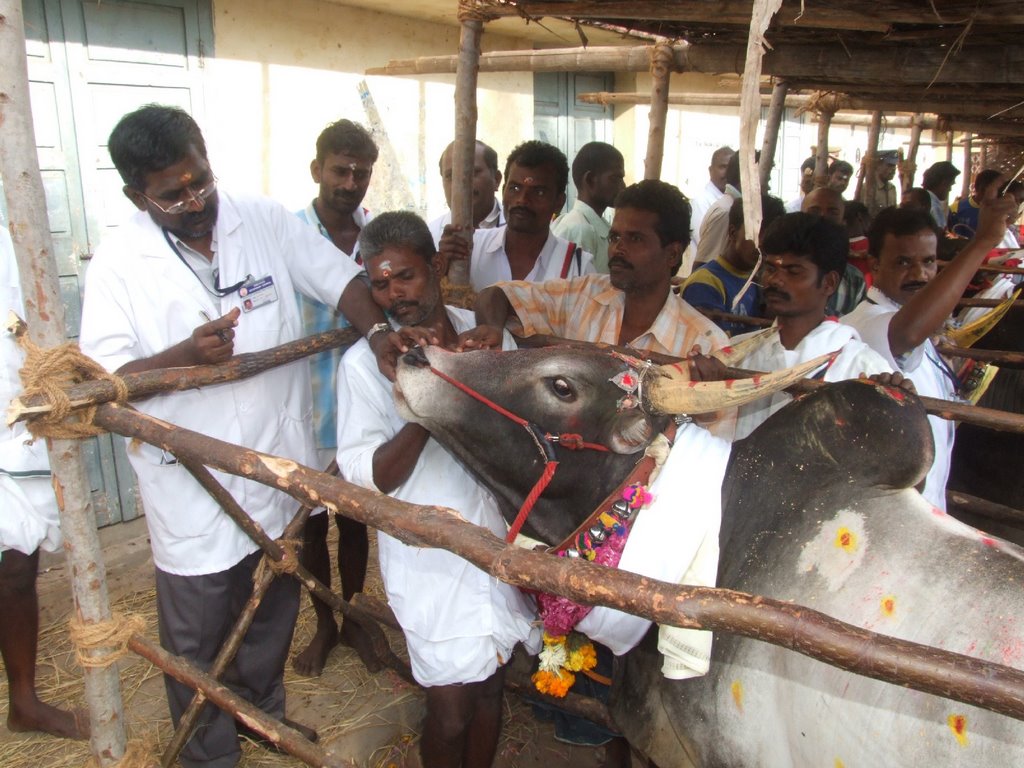
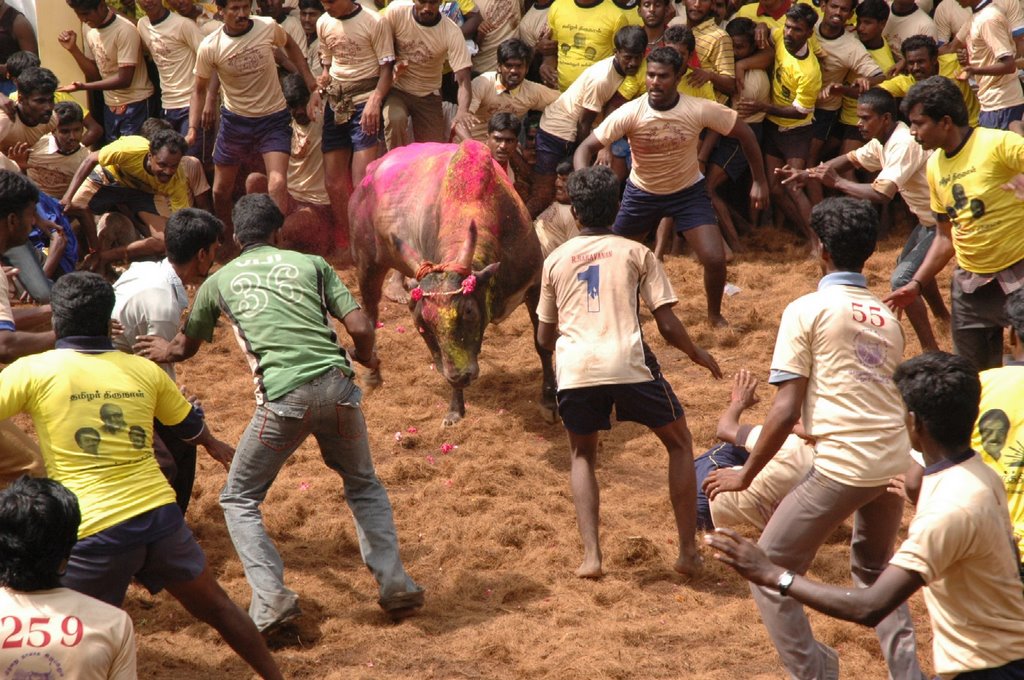
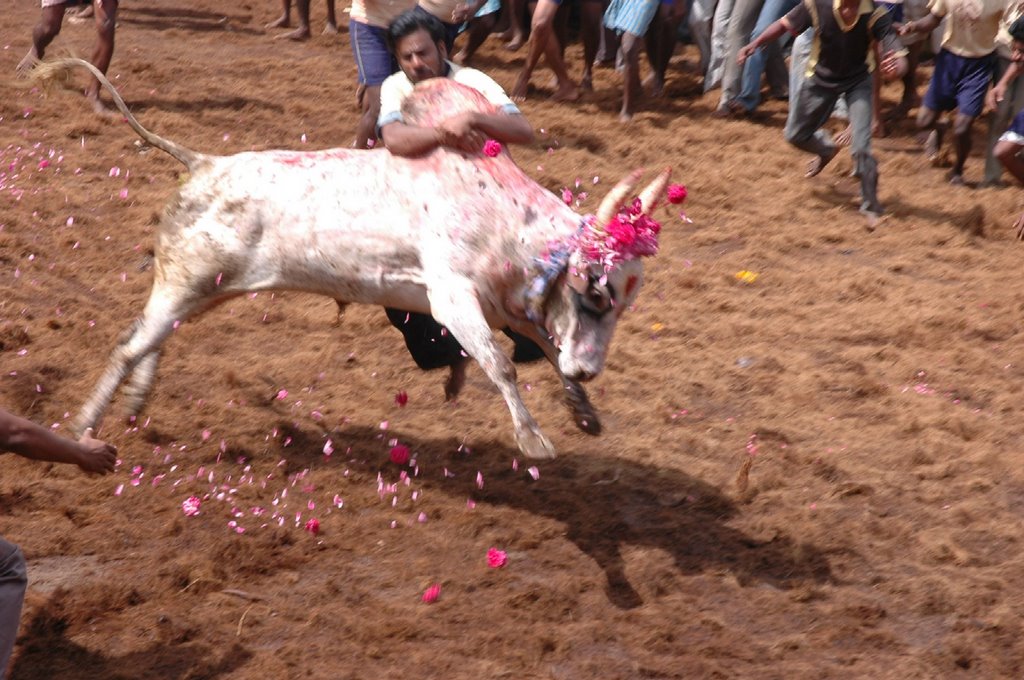
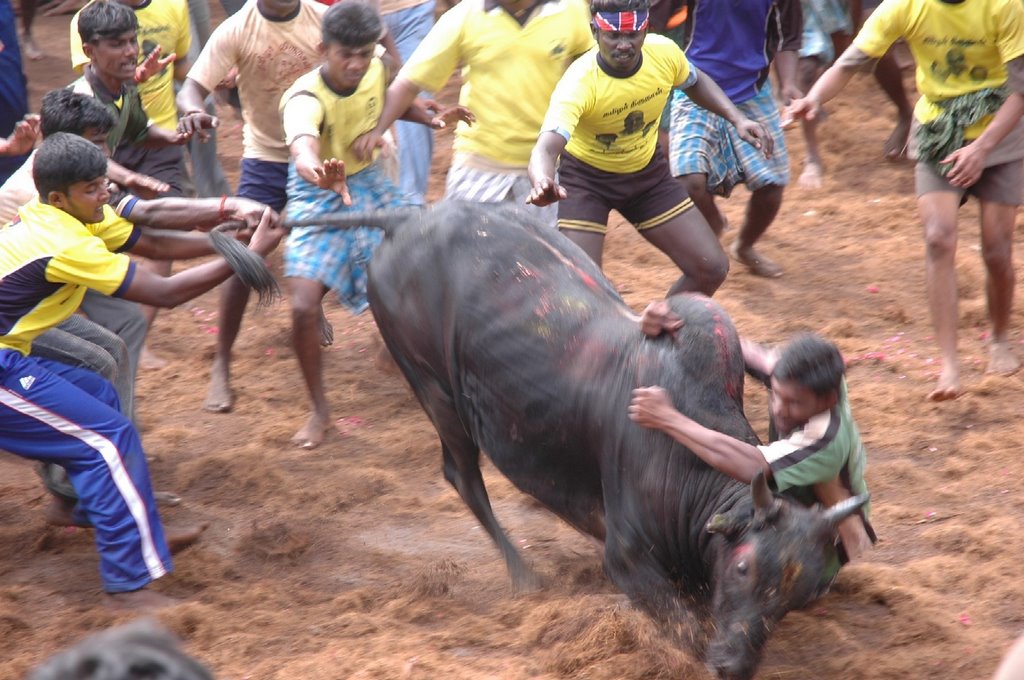
Here are the pictures from the world famous Alanganallur Jallikattu. The pictures and the text is borrowed from the copy filed by our Madurai correspondent.

The jallikattu held in the Alanganallur village near Madurai on Wednesday, was a “regulated” sport this year with lesser number of bulls and more men participating in this event. Safety measures taken to segregate the crowds resulted in lesser number of injuries. As many as 120 foreign tourists also witnessed in the event.

The sleepy hamlet of Alanganallur, 22 km from Madurai city, wore a festive look with coloured flags, banners and cutouts decorating every nook and corner. People began filing into the galleries, as early as 6 am, to get a vantage seat and the animals were made to stand in long queues outside the arena.


A team of veterinary surgeons conducted the eyeball test, heartbeat and breathe analyser tests for each of the animals before allowing them to enter the queue. Though 587 bulls had registered for this year’s event, only 345 animals turned up on Wednesday, of which seven were rejected because they did not pass the tests.Similar tests were conducted for the 527 men who entered the arena, wearing T-shirts given by the organisers after they passed the test.

At 11 am the special pooja was performed at the Alanganallur Muniyandi temple and the temple bull was first released into the arena after which the others followed. The animals were brightly coloured and garlanded with flowers.


Most of the prizes included gold coins, dhotis, shirts, beds and furniture. But, this time the owners of the bulls that successfully evaded the chasers bagged more prizes. Jayapandi of Kalavasal in Madurai bagged ten prizes the highest by a fighter in this game.


“More bulls bagging prizes is the result of the ban on the alcohol consumption by both the bull and man” said Marimuthu, a teacher, who has been following the event for more than 10 years. “Under the influence of alcohol, the men would try to have a brave show, increasing the risk of injuries and death. This year most of them preferred to take
the side stand when the ferocious animals were released” he said.


Due to the elaborate arrangements made at the venue, none of the spectators were injured. This was the first time that a double barricade system had been constructed at the venue. Sixty-six persons were injured, out of which six were referred to the Government Rajaji Hospital and the rest were given first aid at the venue. Over 25 doctors were kept ready to deal with any casualty.

The precautions taken by the district administration had also paid off with lesser number of persons being injured compared to previous years. The superintendent of Police T.S. Anbu made the final checks and took care of the security. Around 1000 police personnel were pressed into duty for the games. Kent, a foreign tourist who had come to see the event, said that he felt it was an “unruly” game and that more care should be taken to prevent injuries to men in the arena. Some of them said they enjoyed the whole game.

Sunday, December 24, 2006

Silent night, holy night.....

Christmas is here. And Chennai, who looks out for every excuse for a celebration, seems to be out of steam. It seems that the hotels, malls and gift showrooms are the ones that are celebrating. Or maybe that’s what I feel because of the warm memories of the cool Christmases I had back home. The dry air, cold mornings and the wind blowing away the fallen leaves…. Another reason to say I missed Kerala.

Christmas became important to me just about two decades ago, after I became a kindergarten student in the convent school near my home. That was my first Christmas celebration. There was a beautifully decorated crib in the corner of the hall where we had our classes. That day, our class teacher announced that we’d have a week-long holiday.

Afternoon, a priest from the nearby church came and he told (read preached) the story of Jesus Christ. Then, a small packet of goodies was handed to us. It had a piece of cake, some toffees, a comb and a plastic whistle. From the next year onwards, students used to stage the Holy Birth. The fair-skinned girls from all classes were chosen to play angels, and the tallest of them would be Gabriel. Then there would be the three wise men, kings who came following the star. The pack of goodies shrivelled to some toffees in the coming years, but the show continued.

I got the chance to be one of the three kings when I was in standard IV. And during the annual day drama next year, I played Jesus Christ. But what made Christmas celebrations more joyous was the relief after the quarterly exams and the coming weeklong holiday.

Back home, I always tried to make a crib like the one I saw in school. But mine would always me a smaller, crude version. Walls of the stable would be made of book binds and the idols were cutouts from greeting cards. For us, making a crib was more interesting than making an athappoo during Onam.

My Christmas lost its sheen once I left the convent. In the boys’ high school, Christmas was just a huge chunk of holidays, when we got a relief from the impending cane of our class teacher. I had decided to make a crib every year, but failed in the second year there.

Then came the Christmas of 1999, the one I celebrated in a train! I was on my way to attend the National Children’s Congress in Goa that year. Our train was on December 25 from Eranakulam. I was roaming around in Kollam railway station with a newfound friend at Christmas Eve. That was the best winter in my life till date, I think.

I never regained the enthusiasm to celebrate Christmas after that, though I would assist my little cousin, student of the same convent, to make his crib. But every year, I used to wait for Christmas. The cold mornings and the dry December wind would bring fond memories to my mind. And during my plus two days, December 21 became more important than Christmas to me. That vacation was our study leave before the model exams.

All these sentiments completely drained away when I joined college. There, days were boringly routine. There too, the dry wind that shook the Cyprus trees, filling the playground with dead leaves, kindled the Christmas spirit. Once, when the wind blew up some dead leaves into the tuition class, my kindergarten buddy and collage-mate exclaimed, "Chritmasile kaattu!"(The Christmas wind!)

I will be leaving for home tonight. My Christmas this year will be spent in train, the second one "celebrated" out of my home. Before typing this post, I googled "Christmas spirit". Result showed a lot of ways to spend this vacation, offers waiting to make the Christmas shopping a wonderful experience, but didn’t show anything that says about what an infant born in a stable in Jerusalem 2000 years ago taught us through his birth, life and death.

Maybe, we should take a walk in a chilly morning, with the dry wind blowing away the dead leaves around us…

Stallone is back

One of my favourite Hollywood heroes is coming back to screen after a long time. Sylvester Stallone might not be a great actor for many film pundits, but I just love him, his movies. Rose to fame with Rocky and Rambo series, Sylvester Stallone was finally seen in his elements in Assassins (1995). Most of his later ventures were either guest appearances or rehashes of his earlier characters. I was happy to see a report on his comeback slotted in the movie page, and was equally disappointed when ads ate away the space meant for the story. I have just copied down the AFP reportby Rob Woolward, for me to treasure. Even if his new venture is a rehash of the earlier movies in the franchise, he has an assured viewer in me.


Los Angeles:
Thirty years after clambering through the ropes for a fairytale heavyweight title shot, cinema’s most famous boxer is getting into the ring once more. But can Rocky Balboa be a box-office knockout?

The first instalment of Sylvester Stallone’s Rocky series was a monster hit in 1976, winning best picture and director Oscar honours and establishing a franchise that would go on to gross nearly $450 million.

But four sequels and 14 years later, Rocky was on a one-way ticket to cinematic palookaville, with 1990s Rocky V earning only $41 million and signalling the end of the road for the punch-drunk Philadelphia pugilist.

Now, though, the 60-year-old Stallone is back, pulling on the gloves once more for Rocky Balboa, which has the boxer coming out of retirement to fight the reigning heavyweight champion in a one-off exhibition bout.

Movie industry experts question however whether the ageing actor’s ring return is stretching credibility too far, even by Hollywood — and boxing’s — elastic standards. “No matter what they do with the story, will audiences buy it?” UCLA film department professor Howard Suber said.
“Stallone can still take off his shirt without shame, he’s buff. But it goes so far beyond credibility that there might be a problem.”

Stallone, however, has not attempted to sidestep the issue of his advanced years during publicity for the film, which opens in US theatres on Wednesday. In fact, he says, the movie is a bruising statement against ‘ageism’. “Just because people get older doesn’t mean they abandon their dream or their ability to want to do something, so Rocky is symbolic of still wanting to participate,” Stallone told reporters in Los Angeles. “Rocky says the last thing to age is the heart, so I wanted to do a film that shows our generation is not on the outside looking in; it’s still vital and wants to be part of the parade, not watching the parade.

“I want to show that life is not over at 50. People say, ‘Come on, grow old gracefully.’ No, why? I’m not ready. I know people will think Rocky is my story, but it’s also my generation’s story.
“I am a has-been, no question,” he says. “But that doesn’t mean you can’t still contribute.”

Getting back in trim for his cinematic return to the ring proved challenging however, even though Stallone stays in shape with regular visits to the gym. “I can identify with the Tin Man before he gets the oilcan — a little creaky,” he quipped.

Joe Roth, of Revolution Studios which financed the film, said there were strong parallels between Stallone, whose star has been on the wane over the last decade after a string of flops, and the character of Rocky. “The script was a perfect metaphor for Stallone’s life — at 60, he becomes an underdog again,” Roth said in an interview with Entertainment Weekly.
“This character is an expression of his own heart. Rather than fight it, he’s using it to tell us how he feels.”

Whether Rocky Balboa can deliver a box-office success hinges on its ability to appeal to a wide audience, says Suber, something it may struggle to do because of the boxing genre’s traditional failure to attract female audience members. “I think this is basically one of those films that appeals to a 14-year-old male mentality. This makes it quite a challenging sell because most of its primary audience weren’t even born when the last Rocky came out, let alone the first one,” Suber said.

“It’s going to have an awful lot to overcome. There’s age of the character, which affects the credibility, and there’s Sylvester Stallone. Sylvester Stallone is not an actor who has any particular following in the early years of the 21st century,” he added. (AFP)

Thursday, December 07, 2006

Bollywood in town

The copy in the local website last week was something interesting.
“Dhoom-2 created box-office history in Kerala. In its opening weekend (Nov 24-26) the film has netted an amazing Rs 40.40 lakhs from 19 screens in Kerala! In Kochi at Sridhar and Padma it has netted a record, Rs 6.08 lakhs. At Kottayam Abhilash- a new record has been set for a Hindi film with Rs 2.43 lakhs net in three days! Even in small stations like Attingal Gowri and Kanjangad Vinayak the three-day net is more than Rs 1.20 lakhs! The youth of Kerala are simply loving the movie and enjoying it.”

I saw the pirated version of the movie; the gimmicks are worth watching in big screen. I remember my childhood, when viewing Hindi movies was limited to the weekly shows in Doordarshan. The usual dose of technicolour flicks, with award winning movies on Sundays and an occasional Anil Kapoor/Sanjay Dutt/Jackie Shroff starrer.

Theaters were not better options either. Not just because I was a kid, but Hindi movies came to theatres very late. With a few, and at times no takers at all, those were used as fillers in between two Malayalam movies. The screen life ranged from three to five days and, for some very popular prints, one week.

The only theatrical release of a Hindi movie that aroused some attention among the then youth was the 1993 release Dhartiputra; that too because the movie was a Mammootty starrer. And we had to be satisfied with a badly subtitled version, titled Jailor, a late release late in Kerala.

Before that, I think Sholay was the only Hindi film that aroused some interest in the youth. I remember Unni maman (maternal uncle) proudly saying, “I saw it on 70mm screen,” when we were watching it on TV. The 1975 release was the nation’s first 70mm movie. The print came to Kollam five years later, and was shown in the only 70mm screen in the town. That was a time when the old brigade of Malayalam heroes headed by Prem Nazir was turning unpalatable for the younger crop of moviegoers.

However, we used to get a regular dose of new Hindi songs through Chitrhaar every Wednesday. I still remember the II standard days when we used to rock the classroom, singing the chartbuster “Chumma Chumma De De…” (Hum, 1991) in our broken Hindi. “Tu cheezh badi hai mast mast..” (Mohra, 1994) was a hit in Kollam too, but the movie came to town the day after our cable network showed the video – original!

The gap between the Mumbai premier and the regional shows decreased with the coming years. Even then, the two three Kerala prints went to the local metros Kozhikode, Kochi and Thiruvananthapuram. Hindi movies were fillers still.

During a strike called by the movie exhibitors’ association in town back in 1995, they refused to release new movies. The running movies were making profit, except in one theater. They had no other choice but to bring in a filler to attract the youth. Thus Hum Aapke Hain Koun..! (1994) came to town, after it’s golden jubilee run in the North Indian circuit.

The coming years saw the advent of cable TV. Hindi channels popularised new releases in almost all towns. Increase in the sales of audiocassettes was the first sign. Rangeela (1995), Raja Hindustani (1996), Gupt (1997) etc charted noteworthy sales figures in the state. And with AR Rahman music conquering Bollywood and the younger generation being regularly fed by the music channels, takers for Hindi films increased. Dil Se (1998) and Taal (1999) had tremendous audio sales. But premier shows still eluded my town.

The first premier show in Kollam came in 2000, when Fiza made its way to Pranavam Theatre; and that too because the scheduled Onam release couldn’t make it that month. Fiza had a comparatively neat run of two weeks, an effect of the hype created after the phenomenal success of Kaho Naa… Pyar Hai earlier that year. Even Kaho Naa… came weeks late, though it had a better collection than Fiza.

That year’s Diwali releases Mission Kashmir and Mohabbatein had three first-day prints in Kerala. Pirated CDs, to an extent, also contributed to the popularity of Hindi movies. Though movies such as Devdas (2002), Munna Bhai MBBS (2003) and Murder (2004) etc didn’t make big in the Kerala screens, they had good video circulation. The Ram Gopal Varma masterpiece Company (2002), even with the towering prescence of Malayalam superstar Mohanlal, could manage only 20 days in Kollam, but the pirate CDs were well circulated.

I saw a Hindi movie in theatre for the first time in June 30, 2003. Bhoot, the Ram Gopal Varma movie came to Kollam exactly a month after its national premier. Till then, Hindi movies targeted mainly college students, resulting in limited collections. Rang De Basanti (2005), a rage across the nation that season, couldn’t make more than 30 days in a youth-centric circuit like Kochi.

By then, the Mumbai bosses seem to have noted South as an untapped market. Aggravated marketing followed, resulting in the bumper opening Krrish (2006) had in Kollam. Kids were the target this time. My five-year-old cousin was so happy when he got a Krrish cape with the biscuit packet. Report was like this: “The Hrithik Roshan starrer has taken Kerala by storm. The film has netted an amazing Rs 16.55 lakhs from 10 prints in its opening weekend (June 23-25) the highest ever for a Hindi film in the state! It is the ladies and kids who seem to be enjoying this movie. The trade is also happy that the film could survive the football frenzy, which has ruined even superstar Malayalam films. Krrish has collected in Ernakulam Padma for three days Rs 2,51,175 and in Thiruvananthapuram Athulya Rs 2, 47,258 a new city record. At Savitha in Peruthalmana in Malappuram district it could net Rs 65,992 in three days.”

The Karan Johar juggernaut Kabhi Alvida Naa Kehna (2006) followed the suit with 12 prints in the state, giving tough competition to Mohanlal’s Keerthichakra (2006) released a week before. It was the first Hindi film to open in two screens in Kochi (Sridhar & Padma). From 2-3 prints arriving months and even years later to 19 premier shows, Hindi movies have come up a long way pretty fast. Really, is my small town turning big? Or is the nation becoming small?

Wednesday, November 29, 2006

Nightshift: Soren's resignation

Tuesday, November 28. 11.17 pm.
Pages were almost finished.
Editor: "OK, Whoever is on night…"
Me: "Me ma’am"
Editor: "OK, This Shibu Soren might file his resignation tonight…. Do you know the issue?"
Me: "Ya Ma’am. He’s convicted in a murder case."
Editor: "OK. So we have to expect a resignation. Keep a watch on the tickers and the TV."
Me: "Yes Ma’am"

11.50 pm.
I was before the TV, watching Boman Irani recalling his days with Sanjay Dutt during the shooting of the Munnabai series, comfortably seated in the visitor’s sofa.
Chief sub-editor: “Hey man, what’s going on?”
Me: “Waiting for Shibu Soren’s resignation.”
And we began a long chat on his former paper, our office and life.

12.11 am.
Got the first print. Headline read “Soren convicted in murder case” I dialed the Editor’s number.
Editor: "Hello."
Me: "Ma’am Chandu here. Got the first print, the pages seem OK. No sign of Soren’s resignation yet."
Editor: "OK, keep watching the tickers."

12.30 am.
No luck with the tickers. Googled “Shibu Soren Resigns” and found out an astonishing 13 full stories, including a front page one in The Hindu! Gone, I thought. We haven’t received even one copy.
Suddenly I noticed the dateline. 2004. That was when the #()$^@% resigned earlier, I heaved a sigh of relief.


1.14 am.
Our sports correspondent, my roommate, screamed, “Dai, Breaking news da! Soren resigns.”
I frantically began searching tickers and news websites. Finally grabbed the detailed PTI ticker.

1.32 am.
Editor: "Hello"
Me: "Ma’am, Shibu Soren resigned."
Editor: "OK, what does the PTI copy read?"
And the page changing began. After five minutes, the headline read “Soren held guilty of murder, resigns”

Friday, November 03, 2006

Chennai rains

The night sky in Chennai was clear on Tuesday: Half moon, stars, and not even a single wisp of clouds. And I almost thought that the cyclone that moved to the Vizag cost swept away the monsoon from Chennai. It took just a day for the rain-god to come back. And I walked in to my office, drenched.

Situation was not better back home, either. During my three-day escapade to my Kollam, I felt one of the strongest doses of Northeast monsoon in many years. At first, I was a little reluctant to get wet. Change of ways, maybe. Chennai rain is something that you would like to enjoy within the safety of your shelter.

But on the second day, rain left me and my bicycle with no choice but to enjoy the shower. Cycled from Chinnakkada Junction to my home, with the rain chasing me during the 5km stretch. I was so drenched that the water from the well back home seemed warm to me. Our crime reporter, a malayalee, remarked later: “Allengilum naattile mazha nanayaamallo.” (You can safely get drenched in the rain bak home) But many residents of my place didn’t enjoy the rain at all. Low-lying areas were flooded. Water reached even the sanctum sanctorum of the Thirumullavaram Vishnu temple, which was considerably high from the sea level.

There was a village pond in the now busy junction next to my home. The geography of the area was such that all the rainwater would flow down from the surrounding areas to the pond. Later, the panchayat decided to fill a part of the pond to set up a market place. Gradually, the pond was filled completely except for a piece of what you will see as a mud-hole. Now, every year, the place becomes flooded due to the blocked natural rainwater channels.

Same was the case in the areas that were rice fields once. An entire strech of about 10 hectares of rice fields, shared by many, is now transformed to a residential area, flooded every year during the monsoon.

Back in Chennai, the situation was different except for the cause of flood. The drainage in city is set up to dump the rainwater and the sewage to the two rivers, Adayar and Cooum, and they would eventually dump the entire lot in the Bay of Bengal. But the amount of solid waste, especially polythene, was so huge that the drainage system was blocked in several places, causing the roads to flood whenever the rains show their might. The low-lying areas were the automatic victims of the downpour.

How I wish to be back in my home when it rains…………

(By the way, it's been a year since I started blogging. Srini was the one who introduced me to blogging. Irregular posts, random thoughts, and 365 days.. Happy anniversary to my space in the internet!)

Sunday, October 15, 2006

Sorry, was a bit busy, u no.....

It’s been long, very long since I gave some feed to my page. Actually, I had nothing much to write about, or I had lost my nose for news!! So I thought I’ll scribble something on the daily Chennai, because that’s the only thing new.
(Sorry Chennaiites, my jottings about your city and the familiar sights might not be interesting to you. These are what kicked up curiosity in this lonely mallu, who’s out of his home for the first time!)

Let's begin with plagiarism. This is a forward I got just now.

The following is an excerpt from a blog (written by an Indian in America) Wednesday, September 28, 2005

EN PER PEDUM PAADU!!!

My full name is Kalaivani, but I call myself Kalai. This is not for scene, ...like how Madhavan does in Anbe Sivam (Anbarasu --> Ars).it has a looooong and pathetic history... I started hearing different versions of my name after coming to this country, and the painful fact is all the possible permutations and combinations of vowels in my name give meaningful words in tamil!!!

When I first joined the university, my professor wrote to me.. Dear KALAvani (meaning: thief; context: kalavani paya..) ... ... ... Sari adhuvachum typo nu free ya vittudalam.. Then after a year, I joined a company for internship.those people called me before I joined, to inform me about some test which I had to take.. "Hello is this Ms. Kizhavaani?" (meaning: old; context : kizha bolt..etc.) "No..this is KALAIvaani" "Ohh..am sorry KALAvaani" (Marupadiyum...)

Then I decided. Periya pera irukkinala thane ivlo confusion?!! So, I started calling myself 'Kalai'... but the story continued..

I joined my full-time position in another company recently. On my first day, we had a meeting.. "Let's all welcome our new associate.Ms. Kulai" (meaning: bunch; context: kulai kulaiyai vazhaipazham kaaithadhu) CLAP! CLAP! CLAP! CLAP! Followed by smiles. (Dei. ennangada... ellarum serndhu comedy panreengala???) Anniku arambichadhu...

Once my boss and I were talking about a project... after finishing the meeting... "Ok, Kali. Nice to have you here!" (meaning: last yuga; context: kali muthi pochu.) "That's KALAI" (Enakku idhu thevaya?!) "Ohh kAALi?" (meaning: goddess; context: badrakaali..)
"Hee hee .very close" (Podaannnggg...!!)
So, I stopped correcting my name after that..!

One fine morning, I was working. "Hey kiLai (meaning: branch; context: marakiLai) .howz it going?" "Yea good" (Sollitu thirumbitten. Nammaluku edhuku indha per thiruthura business nu...) "Is that how you say your name?"
(Aaahaa arambichutanya...!!!)
"Uhhh. It's KALAI" "Kolaai?" (meaning:pump; context: kozhai adi sandai.)
(Venaaammm...) "Kolai?" (meaning: murder; context: kolai panniduven..)
(Venaam!) "kaLai?" (meaning: weed; context: kaLai pudunguradhu.)
(Valikkudhu... azhudhuduven...)
"May be I'll get your name with practice. Haha." (Idhellam remba over da dei... Tamil la paatha rende rendu ezhuthu thaan da!!!)
Ennada, Chandramukhi la thalaivar 'durga' perai nakkaladikkira maathiri... namma per ayiduche nu nenaikkum podhu... my friend came up with a brilliant idea!
Adhavadhu... to compare my name with a word.so I started using this word 'kaleidoscope'; which has the same pronunciation as 'kalai'! So, I started telling everyone. 'Kalai as in kaleidoscope'!. Ippo kooda romba ellam ozhunga solradhulla. They are saying 'kalaai' (kalaaikiradhu)..

"Hey Kalaai!!" "Yea?" "Just trying to say your name. Ha ha ha" "Ohhh ..how sweet!" (thooo thEri..) Yedho vaandhi edukkira effect la per irundhalum... my life was in peace... until few days back... My net connection was down, so I called up the customer service (En kiragam. Madras call center ku pochu!) Enakku andha vishayame theriyala. So I started in complete American accent... "Your name ma'am?" "Kalaai" "What? Can you repeat ma'am?" "
Kalaai as in kaleidoscope" "I didn't get that ma'am. Can I have your number? I can check the records" (Sigh!... and gave the number) "Ohh, Kalaivani, right?" (in a sarcastic tone.) (Ada paavi makka... nee nammooora??!!! All American accents stopped. Back to Indian accent.) I could clearly see what he was thinking... per paatha 'urs pammingly' nu podra category maathiri irukku... scene podradhu mattum princess Diana range kaa...

Anna... naan sathyama andha maathiri illeeenganna!!!"

Tuesday, July 04, 2006

Too homesick?

His call yesterday was a real surprise. Was having the usual wrestling with pages when he called. Someone who knew my past; someone from Kollam. He was in Chennai for the past 8 weeks and I didn’t know!

Boarded the busy local train from Guindy this morning. He was waiting for me at the Nungambakkam railway station. Seeing him was like reading the Manorama, hearing a Malayalam song! Gosh, I am too homesick!

I was seeing him after a year and two months, to be precise, and there was a lot to talk. How's that guy, did u know this happened and such….

His bike took me to a place where I made the discovery of the week: A restaurant named Kumarakom near Royapettah!

Kerala style boiled rice, Kappa, fish curry, and even Jeera water after the meals!
Malayalam songs being played! Felt like home, truly.

Am I becoming too homesick? Maybe all these will end, once I get used to the Chennai way, although I sincerely hope not to happen that way!

Wednesday, June 21, 2006

Chennaikkaran, Chennaiwala, Chennaiite?

Employed, finally.

Now Chandu is a sub-editor in a new Chennai daily.
Found a place at the border of the city.
Every morning my first sight is a big sign “Corporation of Chennai welcomes you.”

Saturday, April 15, 2006

Nanna Bengalooru

Finally, after a wait of five "vetty" days, I started the work in VT. The story goes on like this:

Sunday April 9
Landed at 7:30 in the morning at Madivala bus stop. Carried the heavy baggage to a nearby phone booth and called Sandy. He’s out of range. Tried after half an hour. He replied that he’s still in Dharmapuri, coz the bus had some problem.

9:30am. Sandy landed. As we began chatting, his friend and our local guardian Bibin came. Together in an auto, we headed toward our three-week shelter. Six jolly good fellows greeted us there.

1:45pm. The entire gang in the flat walk out towards the bus stop. Destination: National market, B’lore. Mission: To track the place where ipod is available at the cheapest price.

3:30pm. We were at the famous Forum Mall. Went inside the Apple showroom there, listened to a 30GB beauty worth around 26K. Attached it to a flying-saucer-like speaker and heard the unexpectedly loud sound. Both together would cost around 35K.

We walked out of the showroom of B’lore’s elite best.

Monday, April 10.

8:00am. Sandy n me were ready to join the papers. He went to DH office, which is on MG road and I, towards VT office in Chamarajapet.

9:15 am, VT office. I was waiting for the chief to come. Came to know on enquiring that he’ll come only by 2. Got the instruction to give my contact no. to the chief and he’ll inform me later. Called my friend Mathew, he promised to help to obtain a mobile connection.

Tuesday, April 11.
8:30am. Called the chief, gave Sandy’s no. Got the assurance that I can join by
Wednesday. I called Mathew, he asked me to come to City Market. Boarded a bus from near Neetha’s college.

1pm. I was at the city market. Near the market there is a huge Masjid, the biggest I ever saw. Went around with Mathew through the crowded galis in search of a sim-card vendor. Finally, a shopkeeper pointed us to a corner, we went there to meet a guy with a shop in the bottom of a staircase. He was catering us as well as chatting with people in his mobile and land line. Mathew asked in Hindi, in which he replied, spit tamil into his cellphone and Kannada into the landphone. I was pretty jealous!!
After a few minutes, I owned a binaami mobile connection.

Wednesday, April 12.
8:30am. Called Chief to give my number. Joining was still unconfirmed, as there was some “technical difficulties.” He assured to take me to office at Thursday. Promised to meet Sandy at his office at 5pm.


2:40pm. Message from Sandy: “Rajkumar expired.”

4:25pm. I venture out towards Forum. Purpose: To walk through it, reach the road on the other side, board a bus to MG Road and Meet Sandy n Sreeni.
I saw the main entrance closed, so I enter the complex through sideways. Inside, a Kannada announcement is going on and the only word I could make out is Rajkumar.
Saw police on the other side, they all looked worried. Bus came and I boarded it.

5:15pm. After a 15-minute effort, I located Deccan Herald office and when I was about to call Neetha, Sandy n Sreeni came out. By that time, the almost all stores were closed. We had tea from a wayside vendor, walked around to see the deserted street, and I ledt the place.
I walked around a little, then Mathew called me. He was in Shivaji Nagar, a place nearby. By the time I reached Sivaji Nagar Bus stand, he left. I waited for my bus for half-an-hour. Then Mathew’s message came: “Rajkumarz dead n crowds r creating prblm everywhr n u r out. Reach home safely”

Got in the first bus, realised midway that I am in the wrong bus, jumped down and began walking. By the time I reached our shelter in Thavarekere, I had covered 9 km. All the shops were closed.

Thursday, April 13
BANDH
It took till 9am for us to realize that we have to find a way to secure us breakfast, lunch n dinner. Just then, chief gave a missed call. I called back only to confirm that I won’t join office that day. Entire Bangalore had come to a standstill.

Friday, April 14
Vishu
Got the first greetings from my dad’s eldest brother, saw the details of Thursday’s violence in the newspaper.
3:15pm. I entered VT office. A 45-minute wait for the man in charge.
4:00pm. Man in charge asked me to come at around 5:30 because te chief reporter is out of station. I walked out to begin a one-and-a-half hour roaming around. Covered the Palace of Tipu Sultan, Bangalore fort and Sultanpet market.

5:30pm. I was sitting before the chief reporter. He gave me a copy of today’s paper and asked to go through the layout and briefs. I went through it twice before one of the staff borrowed it. Sat idly there for another 30 minutes. Then he asked me to come at 2pm on Saturday.

Came to the shelter to receive a treat of a huge watermelon bought by my apartment-mates.
Kal se aslee kaam chaaloo………………..


Tuesday, March 28, 2006

Leaving MASCOM

Recieved diploma, time to leave.
A phase ends, for another to begin...
Nishad has the pics (mirrorofnakedeye.blogspot.com),
Sreeni wrote the details..... (srinivasjam.blogspot.com)
I am left gathering memories....

Monday, March 13, 2006

One-day magic again!

Saw the most sizzling ODI in many years. A world-record reply from South Africa for a world-record challenge from Australia.

6:00 pm. I entered the TV room and Prasanth said, "See the score of Australia." I stared with wonder at the seemingly magical figure of 434-4. "Man, a world record!" I exclaimed.

7:30 pm. Sreeni and Shyamala were ready to go out for dinner, but as we neared the TV room to see the score, heard ecstatic applause from Aby . Herschelle Gibbs was mercilessly punishing the Aussie bowlers. We were literally glued to the screen with occasional ear-piercing cries and applause. He was 175. Just then, he was caught out. Disappointed, we went to the canteen.

9:00 pm. We returned to the TV room, SA was 48 to win from 59 balls. Height of tension.

9:25 pm. Hall was out, Lee’s delivery. Ntini came as the last man. Two runs to win. Ntini hit, and I was screaming "Run you bastard!" One run from two balls. Boucher struck a four, and history!

Our TV room was virtually shaking. We were all jumping out of joy. That was The match! I was reliving the excitement I had long back during the final of the 1998 Dhaka Independence Cup, when India beat Pakistan, chasing the 304 challenge. The match fixing scam had drained out the excitement. The old vigour is back!
Headlines in many online editions of newspapers are as follows
South Africa shock Aus, create one-day history - Hindustan Times

Cricket 'Dhamaka': SA makes history, smash ODI record - Times of India

Unbelievable! - DNA

ODI history: Australia 434/4, S Africa 438/9 - Indian Express

Avishwasaneeyam! (Unbelievable!) - Mathrubhoomi

Ithaanu kali! (This is The match!) - Malayala Manorama

Tuesday, January 31, 2006

Name game!

"What is your name?" Asked the official.
"Chandu," I replied humbly.
"Really?" He was amused.

He was the umpteenth person asking me whether Chandu was really my official name. For some reason, it is given the status of a pet name.

Actually, I have met not more than ten "Chandu"s in my life. As I said, most don’t prefer Chandu as their children’s name as it is considered a pet name.

This naming game began when I was hardly two. My mother’s name is Shyamala and father’s name is Gopalakrishnan. So they opted for the combi "Shyam Krishnan." But my Unni Mamam (maternal uncle) and Thambi Kochachan (paternal uncle), close friends, stood for the name Chandu.

The reason they said was that they want their nephew’s identity to be something different. And they chose a real oddity to highlight my identity. They were very dear to my parents, and thus they became my Godfathers!

Alas! There was a villian in a famous Malabari ballad with the name Chandu and, without any doubt, he is the most (in)famous Chandu in Kerala, popularly known as Chathiyan Chandu (Chandu the cheat).

Then came the Hariharan movie Oru vdakkan veeragadha, written by MT Vasudevan Nair, in which Mammootty played the role of Chandu. The movie was an adaptation of the old ballad, but the story was how the good hearted Chandu was termed a cheat. He won his first national award for that.

I still remember my mother calling me to go for the movie. I said "NO," because Mammootty is playing Chandu as a Chathiyan (cheat).

From my first week in school till last week here, many asked me Chathiyan Chandu aano? (Chandu the cheat, are you?)when I tell them my name.
My friends from the North may not understand this situation, as names such as Bunty, Chintu, Babli, Munna and such are equally popular there as high sounding names like Prithviraj or Javed Khan.

But then, this is Kerala. Here the name, as an official one, is odd for sure. This oddity is my identity!

Wednesday, January 25, 2006

Too bitter to swallow, too sweet to spit!

It’s been 20 days since I gave my blog some feed. Good ideas came and faded away. I always put the work off to the next day, leaving my blog untouched for nearly three weeks. The one thing that has become a habit for me is practicing procrastination (read laziness).

I am sure there would be no one who, at some point of time, have not put off their work for a future point of time. For a few, the situation is once in a blue moon; for the majority it is a daily affair; for some, it is a habit. The third case is not appreciated by most, as those people are termed lazy. I don’t go for the heavy-sounding word called procrastination. Some time I am lazy; run ahead of schedule at times and strictly follow the timetable at very rare occasions!

My mother, a teacher, often reprimands me for my "putting-the-work-off" habit. I don’t know who said so, but it’s one of my mom’s favourite quotes. "Laziness is sweet; it’s aftereffects, bitter."

But I have a different opinion. Can't we put off a work that we know we can do sometime else? Do we have to strictly adhere to a timeframe, unless the interests of several others are vested in our work?

Thursday, January 05, 2006

Sunday, January 01, 2006

Celebrations? What for?

Slept at 2 last night. Fire crackers, Parathas, Paneer Tikka and three bottles of Vodka added glamour to our New Year Party in the lodge. "Working class" in other rooms and us plus three guests were there for the celebrations.

Joby was a bit gloomy, a shade that was quite unlikely of his nature. He didn’t have the mood to celebrate when his father had to cycle some 10km every morning to give newspapers. That made me think.

What purpose do these celebrations serve? Just an excuse for a change from the routine, to try to have fun by a change in the way you spend your day and money. This was the first New Year Party I attended. The reason for the party? A change in the calendar.

I still remember the night of Dec 31, 1999. When the clock struck 12 and kicked off the millennium celebrations, I was lying on the floor of a railway station in Goa. There were people outside and inside the railway station who had another year of poverty and misery ahead of them.

They had no means and reasons to celebrate. They might also be wishing for a change from routine, and that too more intensely than us.

Amounts being shelled out on New Year celebrations, or any occasion for that matter, are becoming more and more exorbitant. The gap between haves and have-nots is becoming wider.

Thursday, December 22, 2005

Thanmatra

Thanmatra, the Blessy movie is all about forgetfulness. In his directorial debut Kazhcha, we saw Pavan (Yash Malavya) deprived from his parents. Here, Ramesan (Mohanlal) is deprived of his memories.
He is a Government employee, happily married, father of two children and the holder of the dreams of any middle-class family man. His father (Nedumudi Venu) wanted him to join IAS, but he couldn’t. So he wants to fulfill his dream through his son.

Everything goes on fine until Ramesan becomes increasingly forgetful. He finds his office file in his refrigerator and forgets the way to his office. Painfully we realise that he has Alzheimer’s disease, a disorder in which one loses his memories, "from latest to first," as the protagonist puts in.

Though a bit dramatic, the attempt to portray Alzheimer’s, and that too using Mohanlal, is praiseworthy. It was good to see his talents being tested to a considerable extend. Other important characters are Ramesan’s wife (Meera Vasudev), son Manu (Arjun Lal) and colleague Joseph (Jagathy Sreekumar).

If a good movie is one that leaves you brooding, puts you in a kind of hangover that you like, Thanmatra definitely fits the bill.

Songs are composed by Mohan Sithara, Kaithapuram has written the lyrics. Cinematography by newcomers Sethu Sreeram is impressive. It is for the first time that 535- B camera with Moviecam lens- an advanced camera is being used to shoot a Malayalam film.

An impressive movie, good work by the cast and crew. Director Blessy surely lived up to the anticipation generated after Kazhcha.

Monday, December 19, 2005

Long long journey...

Today, the spectator tried a variety of modes of transport. He boarded a motor boat, then a KSRTC and a private bus, a ferry, train and last but not least, a walk of nearly 10km!

Motor boat
It’s fun to be a spectator. This time, the view was the mighty Vembanad lake. I was on a boat to Alappey from Kottayam.

Last night, Sreeni suddenly came up with the idea of visiting the tsunami-struck coastline of Alappuzha. We woke up at 6 today (the earliest since we came here!), got ready and went.
The guys were on bikes, Sreeni and I walked towards the Kodimatha boat jetty.
Misty morning, water lilies and rice fields; the scenery was impressive. Saw Kuttanad almost the completely. The last visit was ten years ago.

You shouldn’t go there alone, because you’ll surely be tempted to tell someone what you feel. You shouldn’t go there with a brigade of your friends, because chit-chat will take away the time to enjoy the scenery. The ideal company would be either your camera or the person you love!

Bus
Reached Alappuzha by 9:15 and caught a bus towards Harippad. On reaching there, we made a sudden change of plan. We decided to go to Karunagappally, towards Amritanandamayi’s ashram. There, we boarded a Karunagappally bus.

On foot
On the way, Sreeni pointed a board showing direction of Amritapuri. We alighted a stop after that, and had to walk all the way back and then another 5km towards Valikkavu, where the ashram is situated. I was walking in my district, my home was just 20km away…

Ferry
There, we had to catch a ferry. We could see the fifteen-storey building from Vallikkavu junction one kilometer away. The ashram was quite big. Sreeni was bowled over! "Macha, I thought this would be one dokku ashram with 10 or 15 sanyasis," he said. There were many foreigners, students, devotees, security and media personnel.

Then we ventured out to find the actual tsunami victims. We found many. I had to as one who knew the tsunami only from the TV. They narrated in simple words what they had gone through. By 3:30, we left Amritapuri, took the ferry and then a bus to Karunagappally.

Train
After reaching Karunagappally, we walked 2km towards the railway station. We reached there by 4:15, only to know that the train will come only at 6. Helpless, we slept in the platform bench.

I continued the session of sleep in the Kollam-Kottayam passenger, while Sreeni jotted down the story. The long, tiresome trip concluded with a 2km walk from the railway station to MASCOM.

Saturday, December 17, 2005

From participant to spectator

He was scribbling a dash here and a speck there. At the end there was a caricature on the board. I was jotting down those specks and dashes, and finally drawn a caricature for the first time in many years. We were at the Kerala Press Club, Kochi, attending a seminar on media and disability. The man was a cartoonist.

I was drawn back to my days at Madhava’s. I drew my first cartoon there; a caricature of Karunakaran.
My first drawing attempt was on the unpainted walls of my then home. I used to get the left-over chalks of the literacy mission campaign. (Unni maman was an active member of the "Saksharata mission."). I still remember Thambi kochachan scolding me for scribbling on the walls.

Then I got my first set of colour pencils. Note books became my canvas. I drew up many pictures, good and bad. But after beginning to use water colours, I started collecting and keeping the pictures. I recall I had more than 100. I used to display them in pride whenever a relative or a guest came.

I learned the actual techniques of drawing in Madhava’s. I tried my hand in cartoons, with good results.

As always, my father was a silent admirer of the pictures. He considered (and still considers) it inappropriate to appreciate his son directly. Instead, he became my patron. I got my first box of imported water colours.

I began participating in drawing competitions. The first prize was actually the first prize of that competition. I drew a peacock. I got fifty bucks. I became the star of my class in the convent.

Many competitions, many prizes. But somewhere I lost my interest to experiment and later, my drive to draw. That was when I joined St Aloysius’. I took part in my last competition there. Those three years turned the participant in me to the complete spectator that I am now.

I forgot the lessons I learnt. My skill lost the lustre of experience. But I still treasure that unused range of Chinese brushes and the made-in-Italy colour box. I still hope to give a try sometime; to brush up.

Saturday, December 03, 2005

INS Venduruthy

6:00am
I was in my room.
8:00am
I was in the Manorama van.
10:00am
I was in a war ship.

We were in INS Venduruthy, the home of the Southern Naval Command; the ship was INS Sujatha, a surveillance vessel.
We listened in rapt attention as Commander Nambiar explained about the machines, terms and jargons in the naval parlance. It was really an awesome experience. It was my first experience. I was interacting with persons guarding the deep-blue frontiers of our nation.
A visit to a ship is interesting; even more so when it is a war ship. One of the things that will catch your attention, even perplex you, will be the peculiar terms used in the ships.

"She performs the surveillance operations," said Commander Nambiar. No, "she" is not his colleague, but a ship. This is what we should call a ship; the reason is pretty philosophical.

The ship, in its hull, holds provision enough for the sailors to last for months. The vessel protects and feeds the "inmates" like a mother. That’s why she is addressed as "She." And every "she" has the initials INS. It means Indian Naval Ship.

The interesting terms do not end there. The front of the ship is called forecastle. So the back should be hind-castle, right? No, it is called quarter deck.

Cabin is a room in a ship, but the room from which the Captain controls the ship is not a Master Cabin. It is called Bridge. "It is the brain of the ship," said Lieutenant Viswanathan. A "bridge" in deep waters!

Speaking of waters, the speed of the ship is measured in "knots." A knot means nautical mile per hour. And the "log" tells the inclination of the ship as she "rolls." Don’t go by the word, log in the ship is quite like a pendulum and to roll means to turn.

When you feel hungry, you go to the kitchen. In the ship, there is a "galley." Don’t be puzzled if someone tells you the food is in "mess"; it also means kitchen. The regular meals for the officers will be served in the "wardroom," that is dining hall for us.

Saturday, November 26, 2005

Lal Lal Mohanlal!


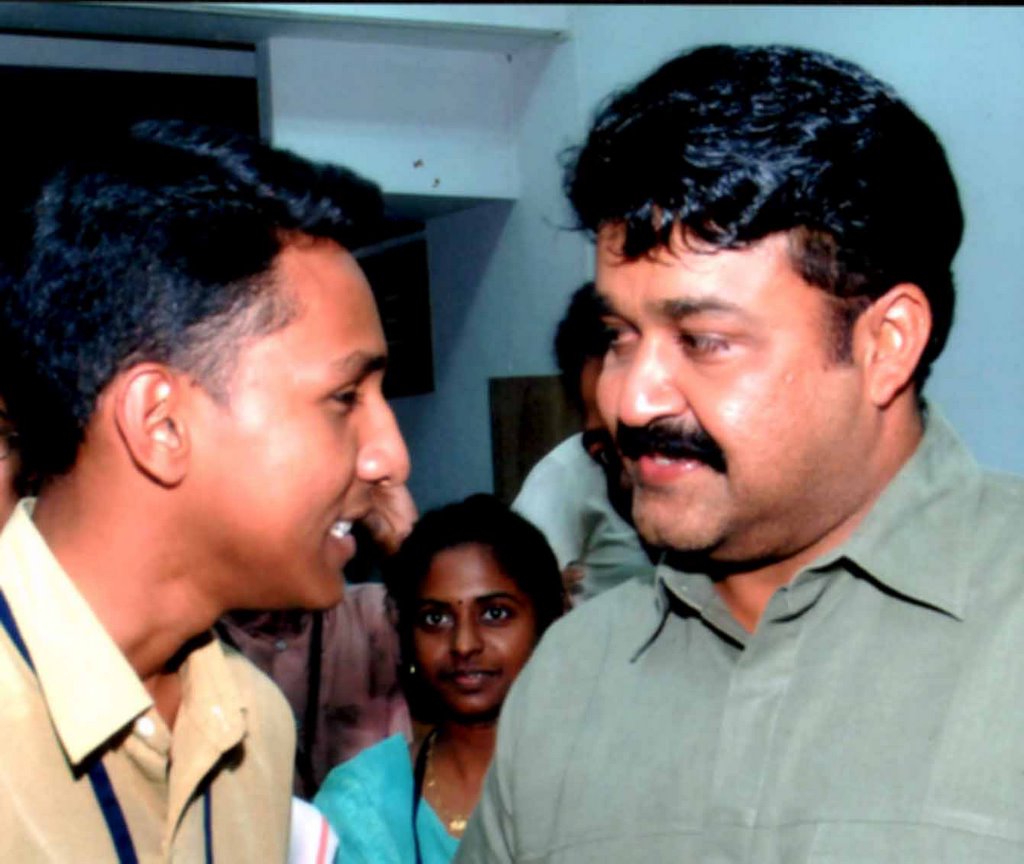
Don’t say that I’m stupid. This is not me, but a die hard movie buff speaking, and he’s quite exhilarated. He just saw, heard and touched his matinee idol, Mohanlal.

Lalettan was attending a function marking the end of his one-year foray into theatre. He had completed eight shows of the solo drama, Kathayattam.

My eyes rarely strayed away from him right from when he entered the podium till he left. I can hardly remember what I blabbered to him. This was the first time I was seeing him in close quarters. This was the first time when I could speak to him.

I know that admiration to eccentric levels is stupidity, but that's what I am. I love, care and admire certain things, to the level of eccentricity. Movies top the list. I grew up seeing movies of Mohanlal, and certain ones, I hold close to my heart.

I’ve seen some of his movies repeatedly that I lost count. His movies (I’m tempted to say he) have a prominent place in my memories, because most are associated with several incidents: curious; happy; sad.

Anyway, all I know is that today I am happy; very very happy.

Tuesday, November 22, 2005

When names lack intimacy

You know what socialism is, right? Have you heard of a socialist language? No, I am not speaking about the style of using the language, but a language that actually gives almost similar status to everybody. It is English.

I realised this as I typed out the previous post. I said Maman for my paternal uncle. In Malayalam, Maman or Ammavan is a common name for maternal uncle. I call my Appachi's (father’s sister) husband also Maman.

Uncle can also mean paternal one, right?. Here arises the problem. Father is Achan in Malayalm. I call my father’s elder brother (he has two) Vallyachan and younger brother (he has three) Kochachan and I affectionately call one among them, Chittappan, which means the same.

But when translation comes, only one term prevails for all; Uncle. Isn’t English a socialist language? This is applicable for the feminine gender also. My Vallyachan’s wife is Vallyammachi for me and Kochachan’s wife is Kunjamma. And my father’s sister is Appachi. My mother’s sister, had there been one, would be my Kunjamma. Here also, translation offers you the convenience of a single term; Aunty.

I have seen children, even youth, using the term Uncle to denote their father’s brother, their mother’s colleague and even their neighbour. Same is the case while feminine.

Moving to Hindi, only the terms differ. Each of the members in the family have names such as Chacha and Chachi; Taoo and Taayi; Mama and Maami; Kaka and Kaaki. Each pair can be replaced by Uncle and Aunty.

Even maternal and paternal grandparents have separate names; Dada and Dadi; Nana and Nani. English conveniently shortened them to Grandpa and Granny.

Socialism prevails while addressing people also. There is Aap to denote respect (mostly to elders), Tum to show camaraderie and Tu to address the younger ones. We have fine tuned to use You to address an individual.

Back here, I have friends who cannot differentiate between Vallyachan and Kochachan; even worse some don’t even know what they mean.

Unnikrishna Pillai is my Unni Maman, Vivekanandan MC is my Thambi Kochachan. I wouldn’t alienate them by donning them the boring uniformity of Uncle.

Friday, November 18, 2005

Soccer speaks...

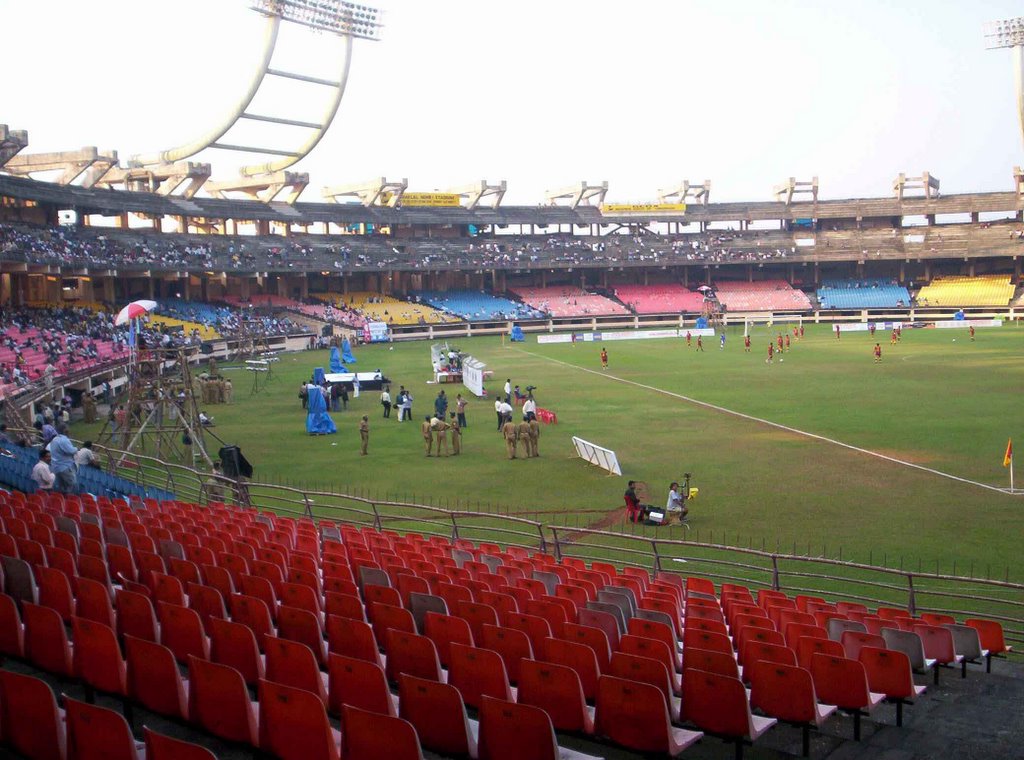
For the first time in my life, I was stepping in to the Kochi Jawaharlal Nehru Stadium. Quarterfinal match of the Santosh Trophy Football tournament between Kerala and Delhi was about to begin. The biggest in the state, the stadium hosted more than One Lakh spectators during the last cricket match, an ODI. Now, there were only about 5000.

I still remember the day when I went to see a football match for the first time. The venue, Lal Bahadoor Stadium Kollam, was a smaller one. I was with Unni maman (maternal uncle), the tournament was Scissors Cup. We were at the gallery. It was drizzling, but it did't affect the spirit of the crowd. By the time the game finished, the whole stadium was wet.

I knew nothing about the game then, other than that you have to score goals to win. When I was a child, my kochachan (paternal uncle) had dictated me two answers. He would ask me, "Jayichathaaraa?" (Who won?) for which I’ll say, "Germany." Then he’d ask "Goal adichathaaraa?" (Who hit the goal?) for which I’ll say "Maradona." And the whole family would laugh!

Everyone of my family, from my 78-year-old grandfather to my sister, are football fans, but I was no hard-core follower of the game. During the 98 soccer world cup, I prepared an album entirely relying on newspapers. I didn’t see even the finals, which was telecast at midnight. I had a very tough time acting in front of my friends that I really saw the match.

Scissors Cup died away, and so did Kerala’s own football club FC Cochin. Two years ago was the last time I went to see a match. Venue was Kollam. I was with my Dad. Then the number of spectators was far less.

Then a World Cup came. The final was on my 18th birthday. Brazil won their fifth cup. Ronaldo was the hero. It was the first televised match I completely saw.

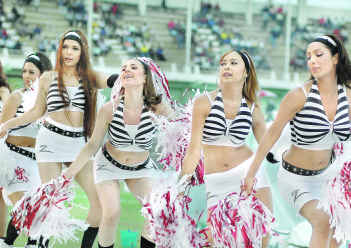
What I expected in Kochi and what I saw there contrasted heavily. Imported variety of "cheer girls" were there, a thing which is alien to the Kerala football scenario. There used to be a time when Santosh Trophy was held in makeshift stadiums, and the entire structure swayed due to the spectators standing up to cheer the players.

These "cheer girls" in their meager clothing does not even serve the purpose of an "item number." Another result of commercialisation of the game. We no longer have the adrenalin for the game. Instead of providing cure, the concerned ones are giving hallucinogens.

Monday, November 14, 2005

For the first time...

Yesterday, for the first time in my life, I drank toddy; ate pork; tasted pan masala; attended a ghazal concert.

"Kumarakom"
When Nishin came up with the idea, I was pretty apprehensive. Already he was in a bad mood; the sky was murky; the destination was a toddy shop.

But Mithun, Prasanth and Srini were ready. So out we went to get the machines and Sanil. Minutes later, we were speeding towards Kumarakom, the backwater village and a popular tourist destination.

Rain had already started when we halted at the petrol bunk at Baker Junction. We went on, racing with the rain. We were sure that it will rain heavily. It was a logical decision to make our way as fast as we can.

It was drizzling though. The road was comparatively narrow. I was in "Watchie’s" (Sanil) Royal Enfield. The six-footer maneuvered the machine with ease.

Then we reached the road parallel to the lake. I have never seen a place where you have boats parallel to your machine. The roadside houses, specially ones in traditional style, were lovely.

We crossed the bridge and reached the rice fields. We could actually see rain coming from a distance. It was really an awesome sight.

In the race with the rain, we reached first. The toddy shop was by the side of the road that went through the paddy fields. Much like any local wayside restaurant.

They ordered pork, chicken, fish and four bottles of toddy as we entered the tatched place. Srini and I were strictly no-no to toddy. I remember Neetha asking me in wonder, "Nee kallu kudikumo?" (Do you drink toddy?).

However, I decided to give a try. Prasanth offered me the glass. I poured half-a-glass and sipped it. It was sour, but was not that awful.
Then came pork. It tasted good, though hot. I needed something hot because my throat was sour, and something spicy would be better, I thought.

Prasanth, as always, was late to finish. Mithun reminded us the belief that after eating, if you let your hands dry, your marriage will be delayed. Sreeni came up with another version that the repercussion will not be a late marriage, but a horrible looking wife!

Within an hour we were on the road, fully drenched in rain.

Back in the hostel, Prasanth offered a little from his pan masala packet. No special taste, though I could feel a particular kind of smell in my breath.

Then we went to listen "Umbayee."

"Umbayee"

"Fragrance of the flowers faded away, all my friends have gone. O! my beloved, when will you come?" I was also translating the lines as I listened in rapt attention to PA Ibrahim, popularly known to Malayalis as Umbayee.

Ghazal, for me, was confined to my tape recorder, television and the bathroom singing sessions. This was the first time I was attending a concert.

I read his biography in a magazine in our library. It was the very first article I read in the institute. I have seen Umbayee in TV, but came to know in detail only after reading the article. And here I was, listening to him.

He gave an introduction in Hindi, with a "madrasi" tinge, but his Urdu was excellent. He began with a song unfamiliar to me, and I began translating.

Ghulam Ali's popular ghazal "Chupke Chupke" was a real surprise. Then came a Malayalam number "Cheruppathil Nammal Randum.." by an unknown writer.

After the programme, when we had a chat with him, he told us that 12 people have contacted him claiming to be the writer of the song!

While coming back, Prasanth commented that liquor and ghazal forms a good combination!

Wednesday, November 09, 2005

Stamp story!

This week's story is on stamps! I was to report on the fake postage stamps sold here and the way Philatelists chooses genuine ones from the counterfeit mass.

This was interesting, because I collect stamps. During reporting, I came to know of the various sources of stamps in town, and also met Mr Mathew, a veteran philatelist.

I still remember our class teacher in the third standard asking us to start collecting stamps after she took the Moral Science lesson on hobbies. I did not care much at first. By the end of the year, I also began to keep stamps that were attractive. By next June, I was hooked!

My first stamp album was a notebook. A crude way to store, I used to stick my stamps in the ruled pages.I exchanged whatever I could collect with my friends in the class.

Then on the Onam vacation that year came an envelope full of stamps from my Dad who was in Dubai at that time. That was my first jackpot, shall I say.

Then I was like a star among the collectors in my class. But one day, my stamp book was stolen. You cannot imagine the dismay I felt. That was one of the rare occasions in school when I cried without the teacher's beating.

Then, during the summer vacation that year, Dad came home. He gave me his collection that he left in one of his suitcases, what we called "Bombay Boxes."

Then I had a real stamp album. He gave me a brand new one also. It was made in China. From then on, his letters were accompanied by stamps.

My collection grew. I began understanding the various ways of collection. It takes a lot of patience to collect a stamp, separate it from the envelope, dry it and arrange according to the album space and classification.

There are stamps which when arranged in a particular order gives you a picture. Once I got two stamps of Pilippines, which formed part of a map. I sent it back to Dad and asked for him to lookout for the joining pieces.
Then, after two years, he sent me the other two, completeing the picture of the map.

There were times when I totally avoided my collection, adding less than five stamps a year. But I didn't give up completely. My collection was in a dormant state then.

Now I have more than 1200 stamps in five albums. Most are used, some are mint (unsealed). But I am still not a philatelist, but a stamp collector. Philatelists are those who collect, classify and study stamps. I just collect and keep.

Most philatelists specialise in certain areas, such as wildlife stamps, space stamps or stamps of certain nations. I plan to specialise in what I call Joint-picture stamps!

Saturday, November 05, 2005

Shoe story!

While coming back from my home yesterday, I browsed through the filed issues of The New Yorker I took from the library. There was a story of a person greatly interested in shoes. He conducted several studies, designed shoes to fit various types of feet, and even those of pre-historic people.

Somewhere, the writer asks why we wear shoes. I remember someone saying, "It is great comfort to wear shoes. You feel it the most when you take it off."

I got my first pair of shoes when I was nine. It was a pair of multicoloured canvas shoes, my long- times wish come true. Wearing shoes was made compulsory in my school that year. I used to wear the same pair of socks for five days at that time!

That was December that year. Black shoes joined the list of our school uniform the next year. I had to wear it on all the days in the rainy June. It became smelly often. I began hating shoes.

Three years from then, I had to wear shoes. In between, I got my first pair of "Action" shoes, cool ones with light in the heels! I joined St. Aloysius’ for high school studies and there was no compulsion to wear shoes in my new school. I almost snapped ties with shoes.

Then I joined SN for plus two. There I had to restore the relationship. I got a pair of black shoes, the sixth pair I had. Then, after six months, dad bought me my first pair of leather shoes-which I still use. I wear it rarely, and they still have their shine, though it’s been five years since I got it.

During the three years in my college, I went wearing shoes only six times (exactly)! And here, two times till date.
Personally speaking, I do not favour wearing shoes. But once I tuck in my full sleeve shirt and wear a belt, shoes become something indispensable for me! Now, I am on a mission to use my leather shoes for three years more.

No, not the record for the longest use. My dad’s Italian shoes are 10-years-old now!

Wednesday, November 02, 2005

Diwali is here


Diwali is here, but our schedule continued as usual. In the afternoon, we went to attend a debate in the nearby auditorium, hostd by DC publishers.

I had to wait to get the interview of the Publishing Manager to finish this week’s story and suddenly came upon the most famous person we ever met- Sudarshan, the Swayamsevak Sangh Supremo! I got a chance to speak to him in Hindi!

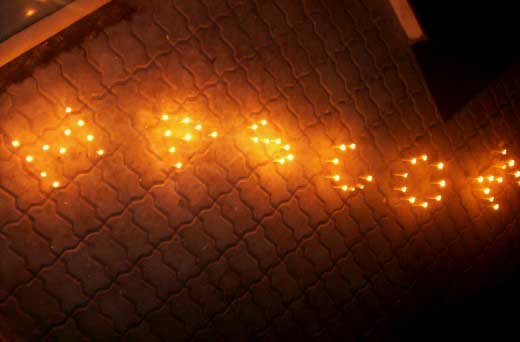
Returned to give away the news and saw candles being lighted in front of the insti! Got a "tilak" and "Balu sheri" (a North Indian sweet) from Khyati, lighted the candles and took photos.

Finished typing my story in record time (which means "screwing" guaranteed)!.
Anyway, I feel quite happy today.